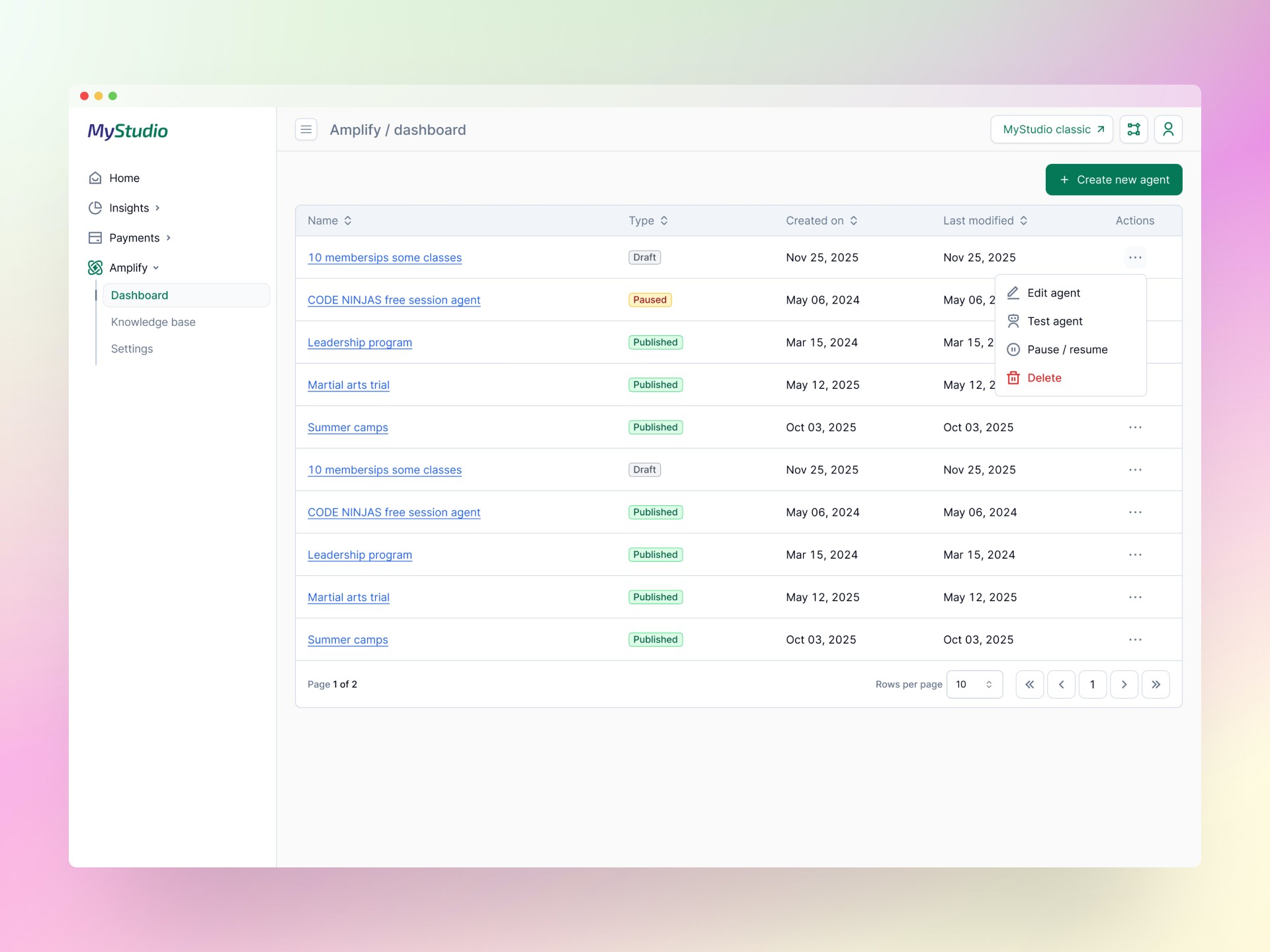
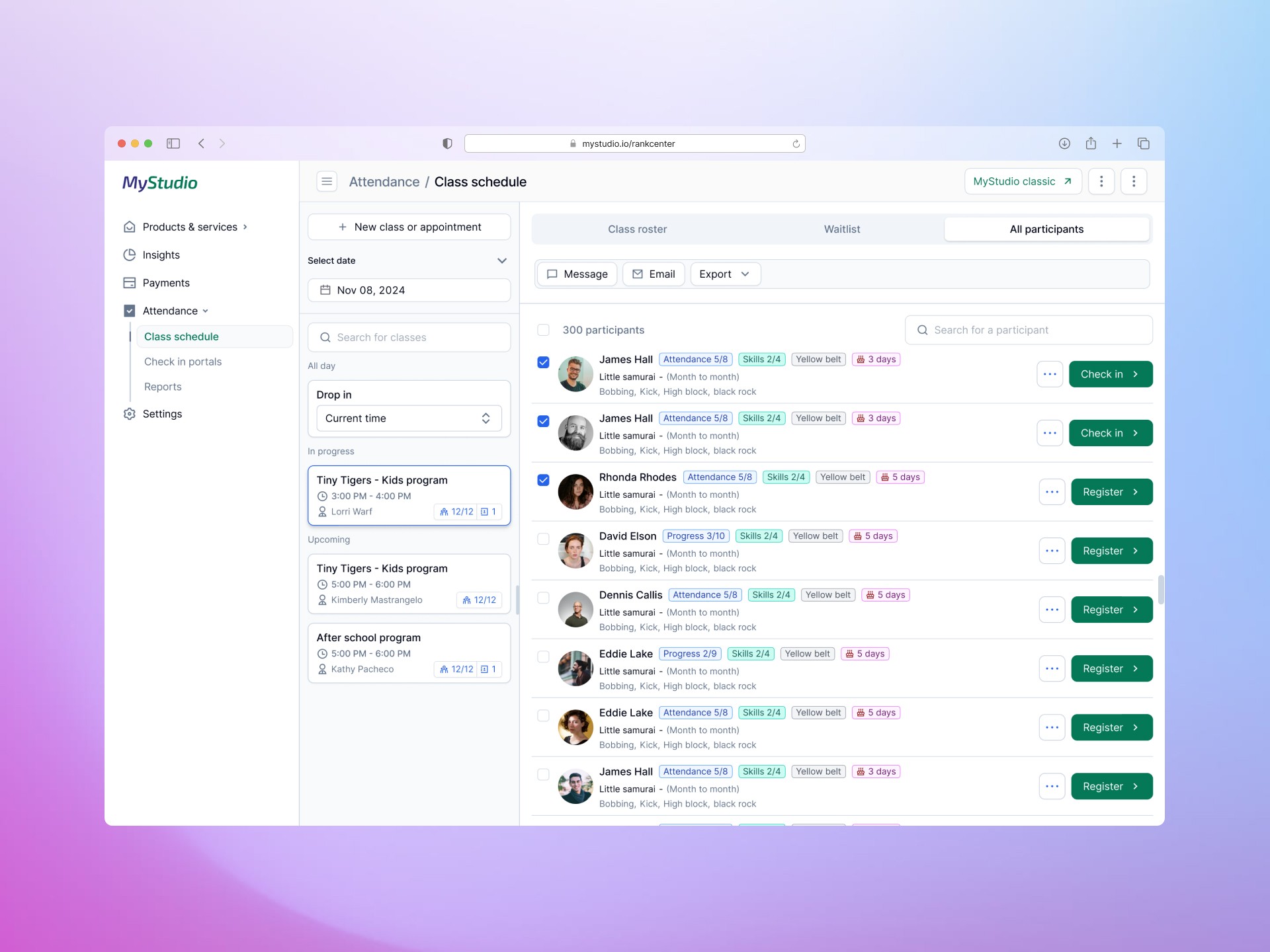
I replaced spreadsheets and manual tracking with one workflow for eligibility, invitations, grading, and certificates.
Role
Lead Product Designer | Product strategy and systems
Company & year
1 year | 8 Sprints | Mystudio | Martial arts
Team
Product, Design, Engineering, and QA

Before
After
Context
MyStudio is a membership management platform for martial arts studios. A core part of its value is rank and level management, which tracks student progress through belt testing.
Instructors must verify eligibility based on attendance, grade students in real time, and process promotions in bulk, often for hundreds of students in a single session.
These events directly impact revenue, retention, and instructor credibility for studios.
Problem
The rank promotions feature did not support how belt testing actually works.
The product handled the last step of a 3-month workflow. Instructors never found it — and adoption was 4%.
Even when instructors found the feature, they still had to rely on spreadsheets and paper to manage eligibility, grading, invitations, and certificates. The product supported the last step of belt testing, but not the workflow that led up to it.

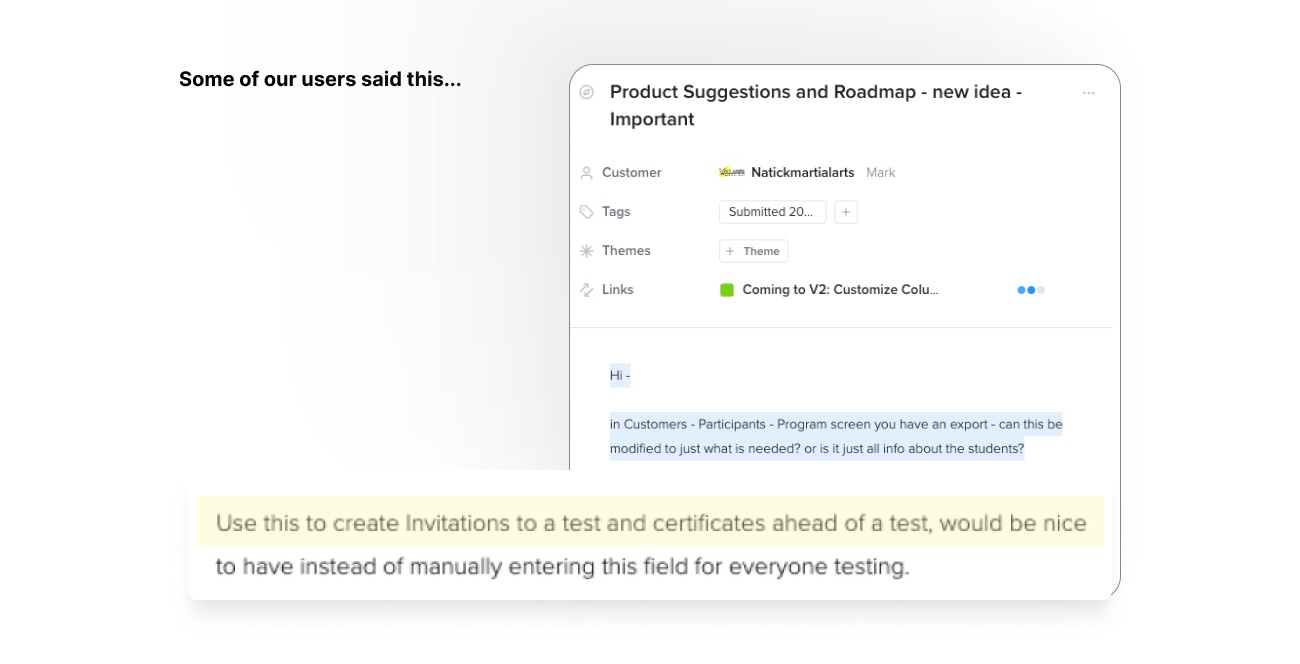
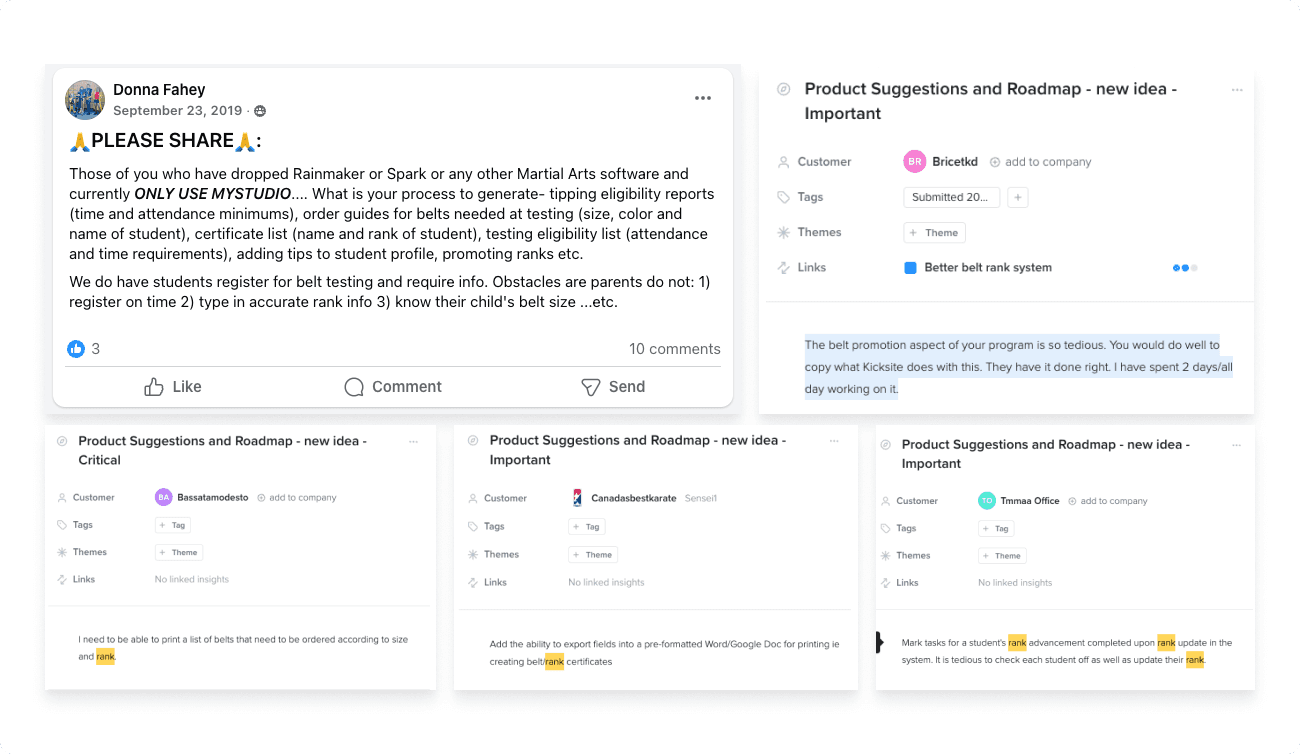
Research
Research showed that belt testing was a connected operational workflow—not a single rank update.
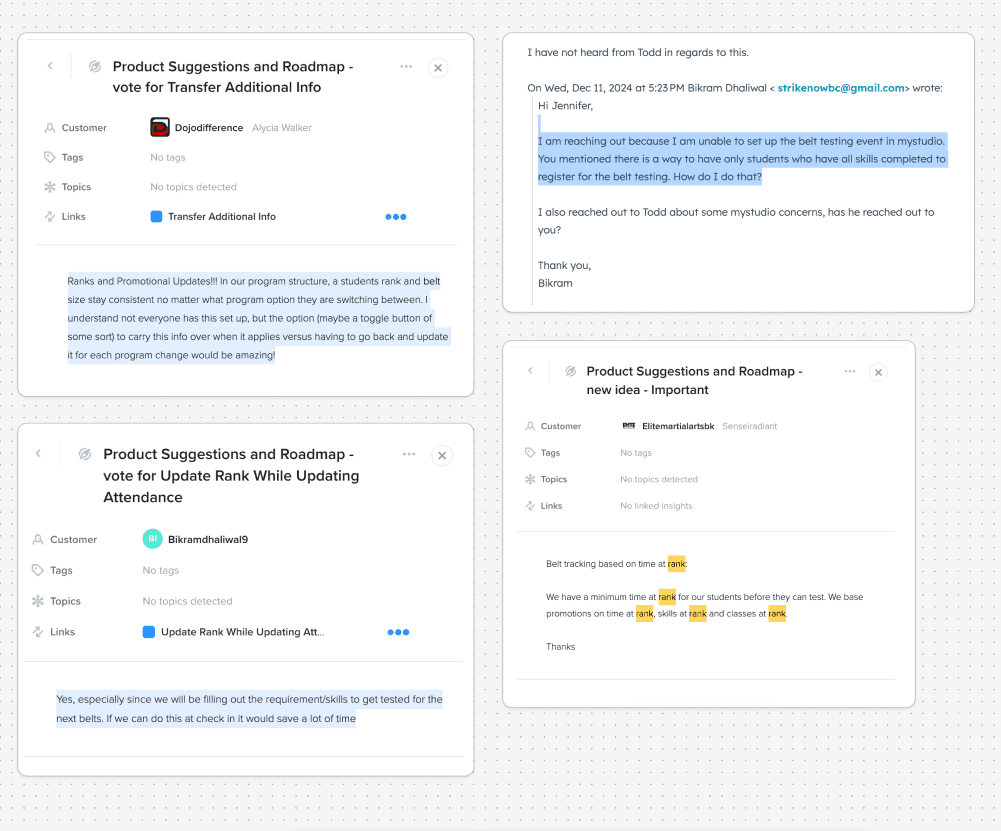
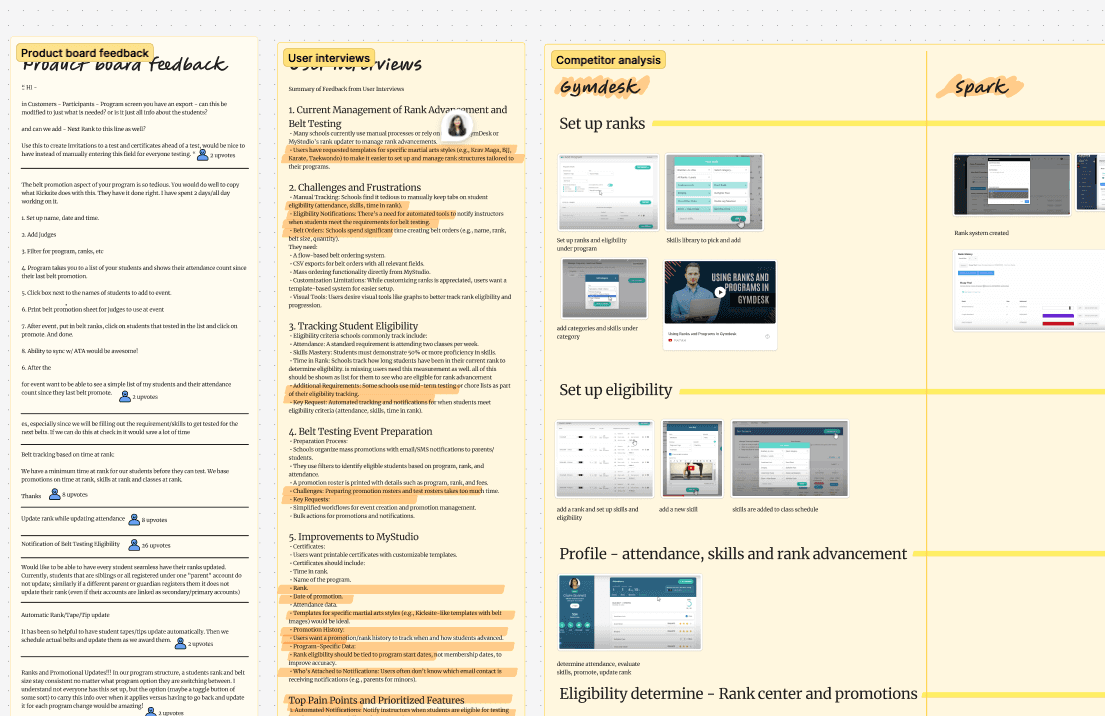
I led discovery with 10 martial arts studios and synthesized user interviews, product feedback, and competitive workflows across Gymdesk, Spark, and Kicksite.
Studios determined eligibility through a combination of attendance, skill mastery, time in rank, and school-specific requirements. They then had to notify students, prepare test rosters and belt orders, grade participants, print certificates, and promote students in bulk, often across disconnected tools and manual workarounds.
The opportunity was to connect the full journey: make eligibility visible and configurable, automate the repetitive work, and preserve instructor control for the rules and exceptions that varied by studio.


Decisions and tradeoffs
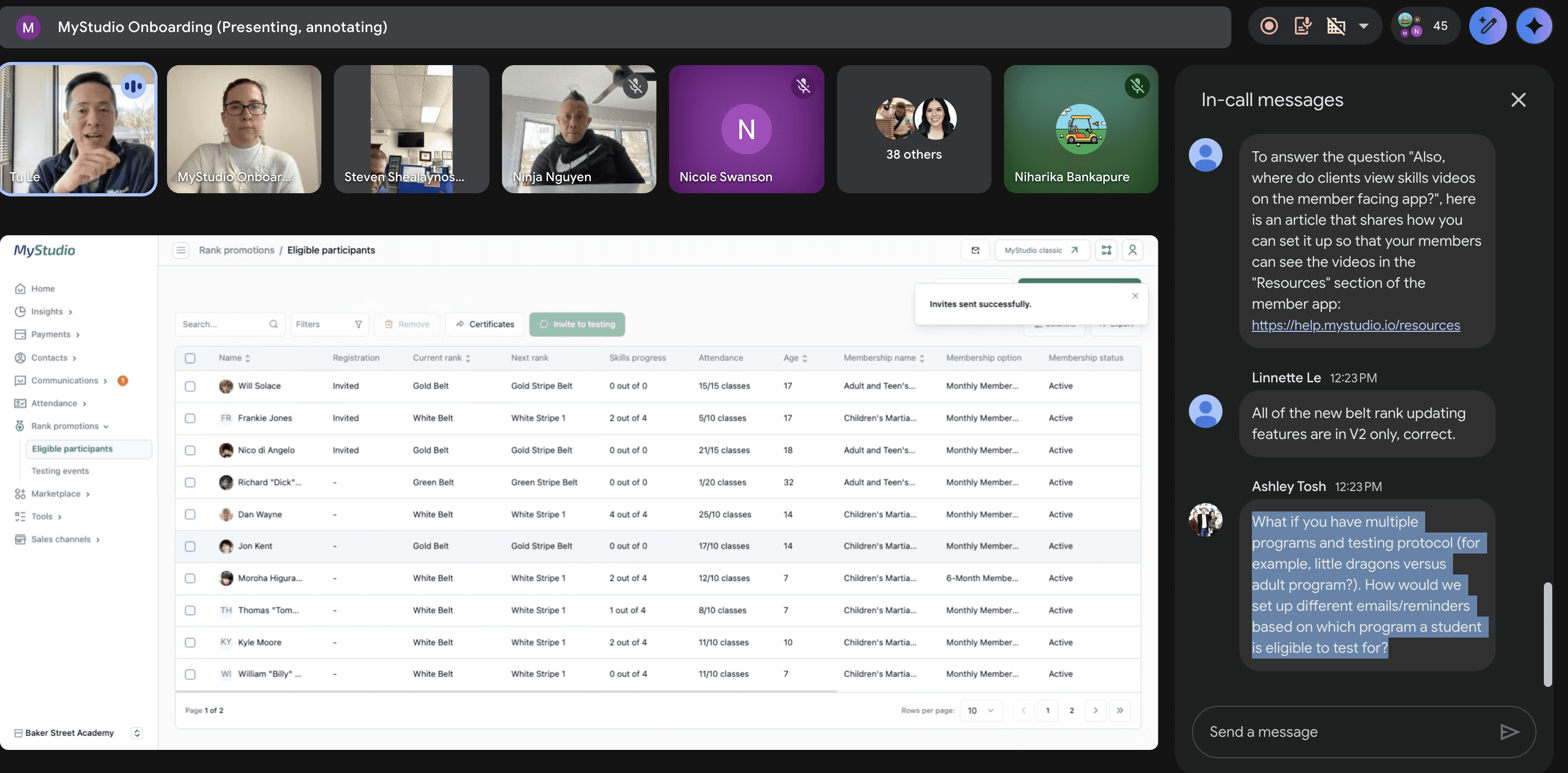
Create a Rank Promotions area with a manual eligibility list
Decision:
We introduced a dedicated Rank Promotions area and surfaced eligibility as a list that instructors could manage manually. This gave instructors a clear starting point to prepare for belt tests without searching across tables or exporting CSVs.
Tradeoffs:
Manual list management meant instructors still needed to make judgment calls.
Constraints:
Eligibility rules varied widely across martial arts styles and studios and existing data only reliably supported attendance and skills, not all real-world criteria
Result:
Instructors had a clear place in the product to manage belt testing, which improved discoverability and reduced reliance on external tools.
Add automations to keep eligibility lists updated.
Decision:
We added automation so participants were automatically added to the eligibility list as they completed attendance and skills. Manual control remained available, but automation reduced the need for constant monitoring.
Tradeoffs:
Automation was designed to handle the most common eligibility scenarios rather than every studio-specific edge case. To avoid incorrect promotions, instructors retained the ability to review and override eligibility when needed. And the automation was off by default.
Constraints:
Time-in-rank was not a consistently reliable or available data point across studios, which limited how far eligibility automation could go. In addition, the automation had to integrate with existing attendance logic without disrupting current workflows.
Result:
Eligibility lists stayed up to date without relying on spreadsheets. Once eligibility became reliable, instructors could confidently move into test preparation, which exposed the next gap.
Support test preparation with grading sheets and belt inventory.
Decision:
We added one-click generation of grading sheets and belt inventory summaries so instructors could prepare for test day without manual counting or paperwork.
Tradeoffs:
We initially explored two grading sheet approaches: a fully customizable version for individual studios and a standardized, enterprise-grade format required by our largest client, ATA. To avoid delaying delivery, we prioritized the ATA grading format and deferred custom sheet creation. This meant other studios had to use the standardized format in the short term.
Constraints:
Building a flexible grading sheet builder would have required significant UI and backend investment and would have delayed support for active enterprise testing workflows. Given limited engineering capacity and the urgency of supporting ATA’s testing model, we constrained the first release to a single, standardized grading format.
Result:
Test-day preparation dropped from days to minutes. With preparation handled, the next bottleneck became certificates, which were still manual.
Enable bulk certificate generation with customization.
Decision:
We enabled instructors to generate certificates in bulk with basic customization, replacing one-by-one creation in Google Slides.
Tradeoffs:
Certificate design flexibility was intentionally limited in the first release. Advanced branding and layout controls were deferred to avoid slowing down delivery
Constraints:
Certificates had to print reliably across different paper types and printers. Design complexity needed to be balanced against speed, consistency, and operational reliability.
Result:
Certificate preparation no longer blocked belt tests. With eligibility, preparation, and certificates addressed, the final missing piece was grading outcomes and promotions.
Support grading outcomes and rank promotion.
Decision:
We designed a grading flow where instructors could mark pass or fail outcomes and promote students who appeared for the test, completing the belt testing workflow inside the product.
Tradeoffs:
Instead of accepting a multi-month roadmap delay, I partnered with a senior backend engineer to run SQL queries against our production data. The analytics revealed a vital insight: a massive percentage of our active studio base operated as multi-disciplinary MMA gyms. These users explicitly required distinct rank tracking mapped directly to separate membership tiers (e.g., a student holding a blue belt in BJJ but a white belt in Muay Thai). The data proved that a single global rank wasn't just technically heavy; it was structurally wrong for our largest customer segment.
Constraints:
Our initial discovery indicated a critical user need: a global, participant-level rank library. However, our legacy system architecture tied student ranks strictly to membership IDs. Shifting to a global participant model required a foundational database schema change that would directly impact 15 load-bearing downstream workflows—including automated billing triggers, student check-ins, and automated milestone notifications.
Result:
We bypassed the database overhaul completely by deploying a defensive UX framework. I redesigned the core promotion workflow to allow studio operators to seamlessly switch, upgrade, or bridge individual student membership structures dynamically on the fly within the grading interface. This interaction design layer eliminated the data blockage, resolved the multi-membership constraint, and saved months of engineering refactoring.
Outcome
4% → ~70%
Adoption increased
1 week to 40 minutes
Test preparation time reduced
Studios eliminated paper workflows
for eligibility, grading, and certificates
Belt testing fully managed inside MyStudio
from preparation to promotion.
Solution
This was a long-running, multi-phase project that evolved as we uncovered real operational and technical constraints. I led discovery with 10 studios to understand how belt testing actually happens in practice—not just how ranks are updated in the system.
Behind the scenes
That research revealed that the core problem wasn’t missing features, but a missing workflow. I continuously validated early concepts with instructors while working closely with engineering to assess feasibility.
I acted as both designer and de facto product manager, defining scope, sequencing work across phases, and making tradeoffs when complexity threatened timelines.
Many decisions required balancing enterprise needs against long-tail studio workflows, such as prioritizing standardized grading sheets for a large client while deferring full customization.
The most complex part of the project was grading and promotion logic. Ranks were tied to memberships, students could belong to multiple memberships, and event registrations weren’t always cleanly mapped. Solving this required multiple iterations with backend engineers, careful performance planning, and explicit handling of edge cases like no-shows and membership transfers.
I also mentored a junior designer on the project, delegating execution work while providing direction on system flows, edge cases, and interaction patterns. As the system shipped in phases, real usage informed what we refined next.
This project reinforced my approach to complex products: design around real workflows, ship incrementally within constraints, and let operational reality—not idealized flows—shape the solution.
Work